What began as political tensions between Bangladesh and India escalated into a full-blown sporting standoff and, ultimately, Bangladesh not playing at the ICC Men’s T20 World Cup 2026.
The chain of events did not begin with an ICC meeting or a security assessment. It began months earlier, quietly, with an IPL contract that spiralled into a larger diplomatic and sporting issue. Below is a clear, step-by-step timeline of the events,
The IPL signing that triggered wider attention
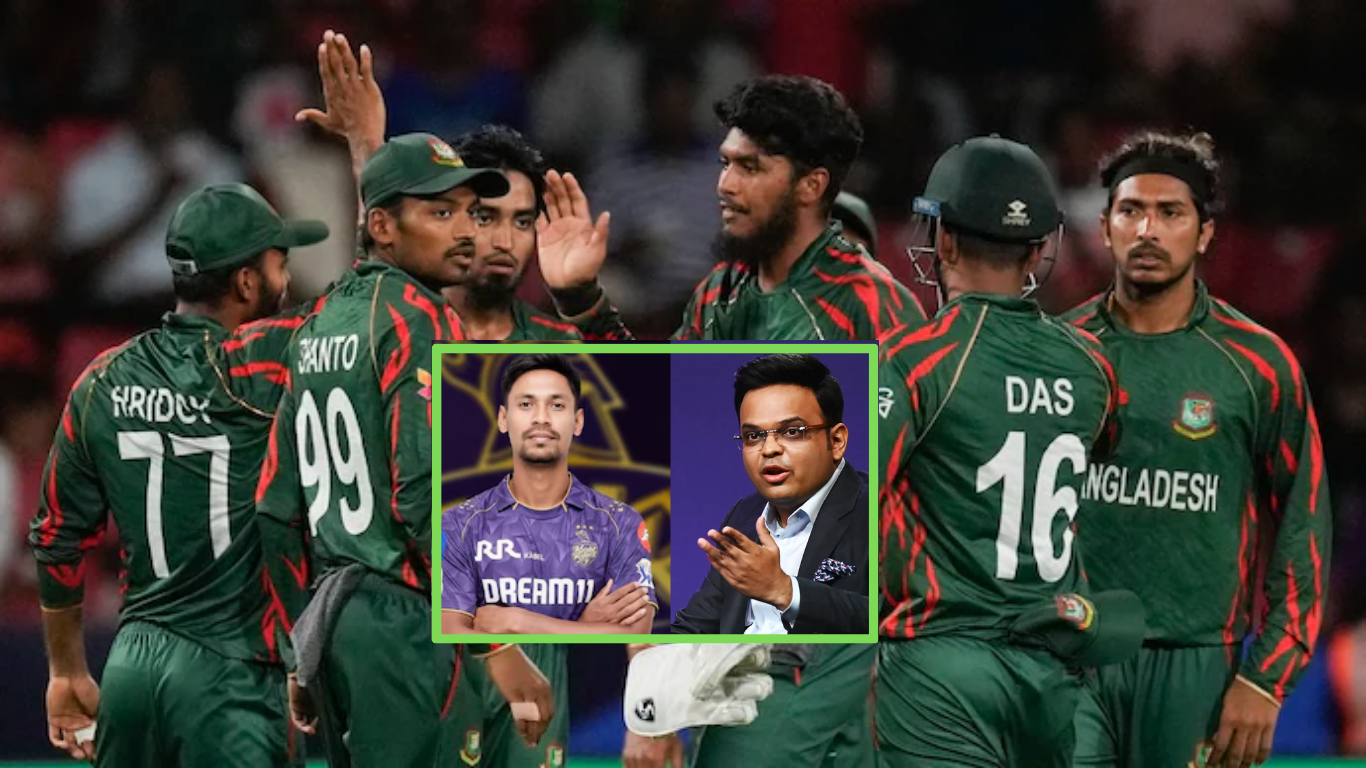
The first flashpoint came when Kolkata Knight Riders signed Mustafizur Rahman in IPL 2026 mini auction. The move itself was routine in cricketing terms, with Mustafizur a proven T20 bowler and a familiar face in the league.
However, the timing of the signing coincided with escalating political unrest in Bangladesh. As images and reports of violence and instability circulated widely on social media, the signing quickly became entangled in public sentiment rather than remaining a purely sporting decision.
Public pressure & BCCI’s reversal
In the days that followed, online backlash from sections of the Indian public intensified. Calls for franchises to distance themselves from Bangladeshi representation gained traction across platforms, placing KKR in an uncomfortable spotlight.
Soon after, BCCI confirmed that Mustafizur would not be part of IPL 2026 and KKR can pick a replacement. The reversal was widely viewed as a response to the prevailing public mood rather than cricketing considerations alone.
The episode marked a rare instance where external political sentiment visibly intersected with IPL squad decisions.
Fallout within Bangladesh cricket circles
The handling of the Mustafizur situation resonated strongly within Bangladesh. It was perceived by many officials and former players as an early warning sign that Bangladeshi cricketers could face complications while playing in India amid heightened tensions.
Within the Bangladesh Cricket Board, concerns reportedly grew about player treatment, public hostility, and the broader environment surrounding Bangladeshi teams touring or competing in India.
Bangladesh goes to ICC
Bangladesh were scheduled to play multiple matches at Indian venues, prompting internal discussions about player safety, travel optics, and crowd behaviour, as their interim government wanted to continue their stance against India.
The BCB formally approached the ICC requesting that Bangladesh’s matches be moved to Sri Lanka, citing security considerations. The request did not reference the IPL incident directly, but the Mustafizur episode was widely viewed as part of the context that shaped Bangladesh’s stance.
ICC assessment and refusal to alter venues
The International Cricket Council conducted its own security evaluations and held discussions with BCB officials. After reviewing inputs, the ICC concluded there was no credible tournament-level threat that justified altering venues at such a late stage.
With logistics locked and schedules finalised, the ICC declined Bangladesh’s request to relocate matches outside India.
Standoff, deadline & withdrawal
Following the ICC’s decision, Bangladesh maintained its position and did not confirm participation under the existing arrangements. As deadlines approached, the ICC faced the risk of disruption to the tournament structure.
With no resolution reached, Bangladesh were eventually replaced in the tournament with Scotland, bringing an abrupt end to their T20 World Cup 2026 campaign before it began.
Why the Mustafizur episode mattered in hindsight
In retrospect, the IPL episode involving Mustafizur Rahman became symbolic rather than decisive. It did not cause Bangladesh’s withdrawal on its own, but it represented the first visible crack where politics, public sentiment, and cricket intersected in a way that alarmed decision-makers.
What followed was a slow escalation: from public pressure, to board-level concern, to formal requests, and finally to a withdrawal that reshaped the tournament.
The bigger picture for international cricket
The Bangladesh situation underlined how modern cricket operates within a complex ecosystem where public perception, geopolitics, and sport increasingly overlap. For the ICC, it reinforced the limits of flexibility once global events enter final planning stages. For Bangladesh cricket, it became a costly reminder of how off-field developments can derail on-field ambitions.
The episode will likely influence how future multi-nation tournaments handle contingency planning, security dialogue, and diplomatic sensitivities long before the first ball is bowled.